If you've spent any time in women's health communities lately — whether online forums, your doctor's waiting room, or conversations with friends navigating their 40s, 50s, and beyond — you've probably heard the word berberine come up. Maybe with excitement, maybe with skepticism. Probably both.
And that reaction makes sense. We've all been burned by overhyped supplements before. Green tea extract that didn't move the needle. Raspberry ketones that promised everything and delivered nothing. So when something starts generating real buzz, the first reasonable question is: what does berberine actually do?
The honest answer is more interesting — and more nuanced — than most headlines suggest. Let's look at what the science actually shows.
What Is Berberine, Exactly?
Berberine is a natural alkaloid compound found in several plants — most notably Berberis (barberry), goldenseal, and Chinese goldthread (Coptis chinensis). It's what gives these plants their distinctive bright yellow color, and it's been used in traditional Chinese and Ayurvedic medicine for over 2,000 years to address digestive issues, infections, and inflammatory conditions.
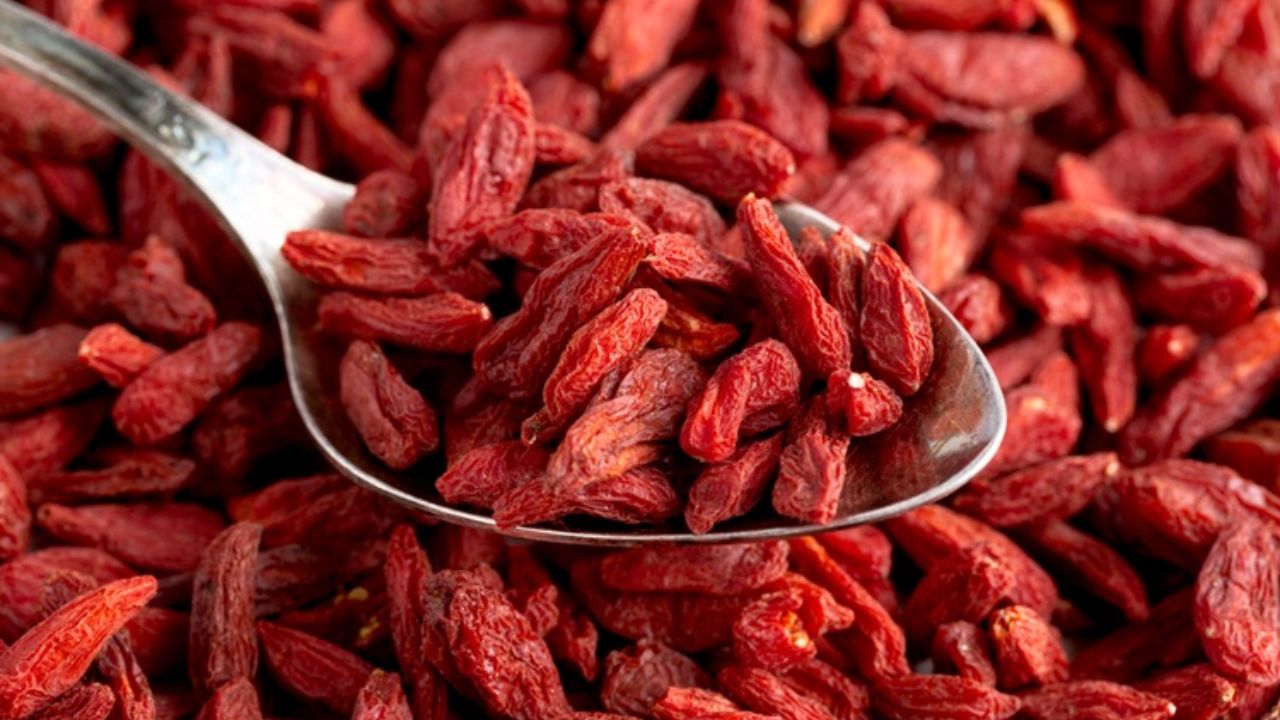
Berberine is widely used to help lower blood glucose levels.
What makes it interesting to modern researchers isn't its history, though — it's a specific cellular mechanism it appears to activate.
Berberine activates an enzyme called AMPK (AMP-activated protein kinase) — sometimes called the body's "metabolic master switch." AMPK plays a central role in regulating how cells use energy, process glucose, and store fat. It's the same pathway activated by exercise and caloric restriction.
This is why berberine research spans such a wide range of conditions — from blood sugar regulation to weight management to cardiovascular health. AMPK sits at the intersection of many metabolic processes that tend to shift as women age.
What Does the Research Say About Blood Sugar and Metabolism?
The most robust body of research on berberine involves blood glucose regulation — and some of the findings are genuinely striking.
A 2008 study by Zhang et al., published in The Journal of Clinical Endocrinology & Metabolism, found that berberine reduced blood glucose levels comparably to over a 3-month period in patients with type 2 diabetes. Participants also saw reductions in triglycerides and LDL cholesterol.
A 2020 systematic review and meta-analysis by Asbaghi and colleagues, published in Clinical Nutrition ESPEN, examined berberine supplementation across multiple randomized controlled trials and found meaningful reductions in body weight, BMI, and certain liver enzymes — all markers that matter for metabolic health.
"The data keeps pointing to berberine as something that interacts with metabolic function in ways we're still working to fully understand."
What About Weight and Appetite — The Questions Most Women Are Actually Asking?
Here's where it gets genuinely relevant for many women over 40 who feel like their bodies have started working against them despite doing everything "right."
As estrogen levels decline through perimenopause and menopause, the body becomes significantly more resistant to insulin, more prone to storing fat around the abdomen, and less responsive to hunger and satiety hormones. This isn't a willpower failure. It's physiology.
Berberine appears to interact with several of the mechanisms involved in this shift.
Appetite Signaling and Satiety
A 2020 review published in BioMed Research International by Park et al. examined berberine specifically as an appetite suppressant and potential tool in obesity prevention. The researchers found that berberine may influence gut hormones involved in satiety — the same signals that tell your brain you've had enough to eat. When those signals are blunted (a common issue in metabolic dysregulation), cravings become harder to manage not because of lack of discipline, but because the communication system is impaired.
Berberine appears to act on gut-derived peptides involved in appetite regulation — including GLP-1, the same pathway targeted by newer prescription appetite-suppressing medications — through a mechanism that doesn't require bypassing digestion.
Fat Storage and Energy Metabolism
AMPK activation — berberine's primary mechanism — directly inhibits enzymes involved in fat synthesis while promoting fatty acid oxidation (the process by which your body burns fat for fuel). In practical terms, some researchers describe this as nudging the body's energy balance toward burning rather than storing.
It's worth noting: this isn't a magic off-switch. Context — diet, activity, overall health — still matters enormously. But the mechanism itself is real and well-documented in the literature.
The metabolic shifts associated with declining estrogen — increased insulin resistance, disrupted hunger signaling, changes in fat distribution — overlap significantly with the pathways berberine is documented to influence. This convergence is why researchers and clinicians have shown particular interest in berberine for women in midlife.
The Absorption Problem — And Why It Matters
Here's something that doesn't always make it into the popular coverage of berberine: its bioavailability is famously poor when taken orally.
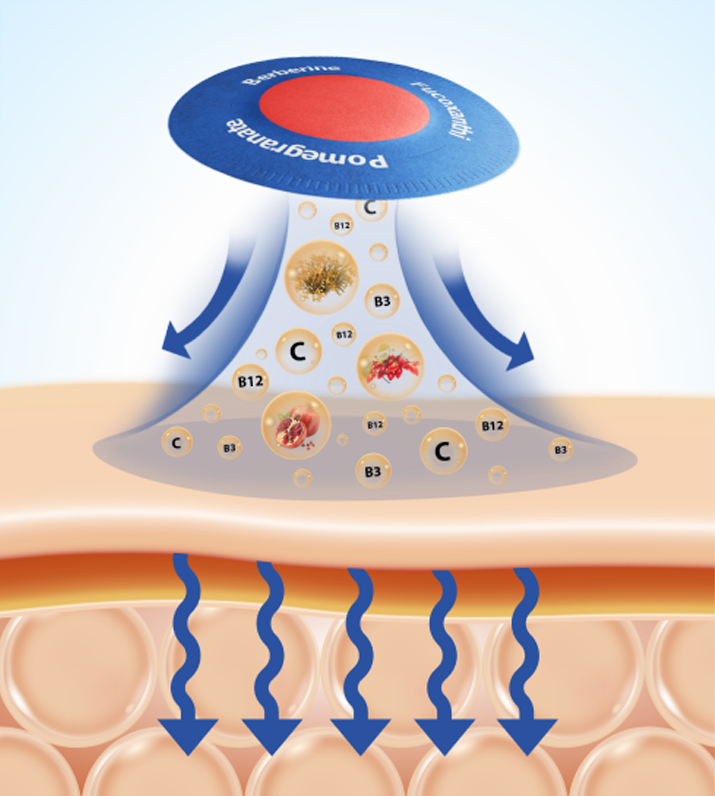
How berberine works in your organism.
Berberine is broken down extensively in the gastrointestinal tract. Multiple studies suggest that only a small fraction of a standard oral dose actually reaches systemic circulation in active form. This is why many berberine studies use high doses — sometimes 1,000–1,500mg daily — and why some people report digestive discomfort at those levels (nausea, cramping, and diarrhea are the most common complaints).
Researchers have been exploring delivery mechanisms that could bypass this problem. Among the approaches studied: micronized berberine, berberine complexed with phospholipids, and — more recently — transdermal (through-the-skin) delivery systems that skip the GI tract entirely.
A study published in PLOS ONE examined transdermal berberine delivery and found significantly higher bioavailability compared to oral administration at equivalent doses — with none of the gastrointestinal side effects associated with high-dose oral supplementation. The skin appears to be a more efficient entry route for this particular compound.
This is an active area of product development, and it explains why you may be seeing berberine in patch form alongside the traditional capsules.
What Berberine Is Not
Responsible coverage requires saying this clearly: berberine is not a replacement for medical treatment of diabetes or any other condition. It is not approved by the FDA as a drug. And the research, while promising and growing, is still largely in the "compelling but needs more large-scale trials" category for most applications.
It is a supplement — a well-studied one with a plausible mechanism and a growing body of positive findings, but a supplement nonetheless. Anyone managing a chronic condition, taking medications, or pregnant should talk to a physician before adding berberine.
What Women Are Actually Experiencing — And Why That Matters Too
Beyond the clinical literature, there's a different kind of signal worth paying attention to: the pattern of reports from women who've tried berberine supplementation and stuck with it.
The consistent themes in these accounts — reduced cravings, steadier energy, less of the mid-afternoon slump that often triggers overeating, gradual changes in how clothes fit — align interestingly with what the mechanism-based research would predict. That's not proof of anything. But it's not nothing, either.
What tends to stand out most isn't dramatic before-and-after weight changes, but rather a shift in how controllable eating feels — less driven by urgent hunger signals, more governed by actual choice. For women who've spent years feeling like their body is working against them despite genuine effort, that shift in experience can feel significant.
"Less fighting against myself. More feeling like my appetite was working with me instead of against me."
The Bottom Line: What Does Berberine Actually Do?
The honest summary: berberine activates a well-documented metabolic pathway (AMPK), which has downstream effects on blood sugar regulation, fat metabolism, appetite signaling, and inflammatory markers. The clinical evidence is strongest for blood glucose management, reasonably strong for lipid profiles, and promising but still developing for weight-related outcomes.
For women navigating the metabolic shifts of midlife — where standard diet and exercise advice starts producing diminishing returns not because of effort but because of hormonal biology — berberine is one of the more scientifically grounded tools worth knowing about and discussing with a healthcare provider.
It won't reverse aging. It won't substitute for sleep, stress management, or a nutritious diet. But it interacts with real mechanisms in real ways that researchers have been documenting for more than two decades.
That, at minimum, makes it worth understanding.
If Berberine's Science Caught Your Attention — The Way It's Delivered Makes All the Difference
Not all berberine products are created equal. Given what research shows about oral bioavailability, how berberine enters your body matters as much as whether you take it. Learn what's new in berberine delivery technology.
EXPLORE THE BERBERINE PATCH — CHECK AVAILABILITY →